

After several trips to Alaska, I’ve found my passion truly lies in expedition cruising. It’s the ultimate way to connect with breathtaking wildlife, dramatic landscapes, and what feels like a far more exclusive perspective of Alaska’s wilderness.
My first adventure was in June 2011 aboard Safari Quest, operated by UnCruise Adventures — a charming small expedition yacht carrying just 22 guests. Over seven nights sailing from Juneau to Juneau, we were fully immersed in nature’s wonders, from magnificent glaciers to an incredible variety of wildlife encounters.
One of the most remarkable aspects of travelling on small expedition vessels like this is their ability to access protected wilderness areas that are off-limits to most larger cruise ships. These special permits allow for a much more intimate and immersive experience, bringing you closer to Alaska’s raw, untouched beauty.
It’s this combination of scale, access, and connection to nature that makes expedition cruising such a powerful way to experience Alaska.
It’s hard to beat expedition cruising for the level of immersion it offers. Smaller vessels are really the way to go — they trade the big-ship amenities for access, flexibility, and a genuine intimacy with the environment. With only a couple of dozen guests onboard, you’re not just observing Alaska — you feel part of it.
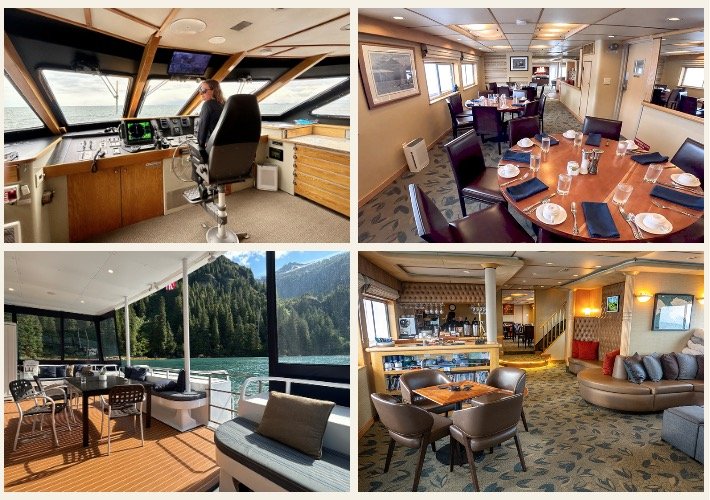
Being able to slip into narrow fjords, anchor in secluded coves, or kayak right up to tidewater glaciers is something the large cruise liners simply can’t replicate. It’s this kind of access that defines the experience, particularly in regions like the Inside Passage.
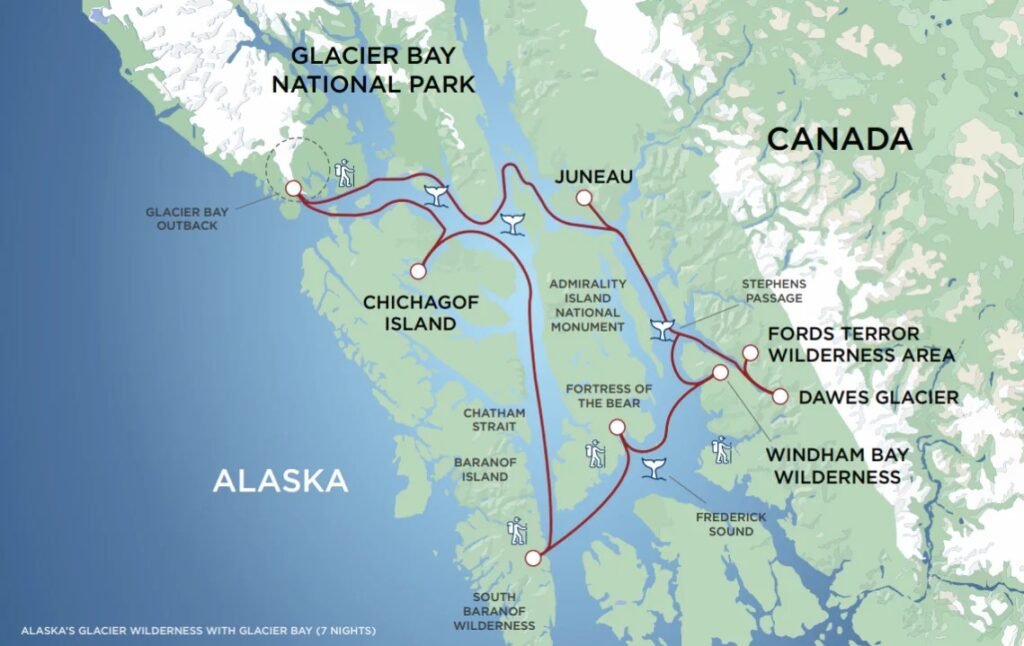
UnCruise Adventures built its reputation around these wilderness permits, which allow access to protected areas — including iconic places like Glacier Bay National Park and remote, rarely visited stretches of coastline. Fewer restrictions and smaller group sizes mean far fewer crowds and far more authentic wildlife encounters.
That often translates into unforgettable moments: watching humpback whales bubble-net feeding just metres from the boat, seeing bears foraging along untouched shorelines, or hiking across terrain with no formal trails — just raw, untouched wilderness.
What really defines this style of travel is the pace. Expedition cruising isn’t about ticking off ports or schedules — it’s about staying with the moment. If a pod of orcas appears or the light suddenly hits a glacier in the perfect way, the itinerary can shift without hesitation.
That spontaneity — and the ability to fully respond to nature rather than rush through it — is what makes expedition cruising such a powerful way to experience Alaska.
When a pod of Orca appeared, we simply slowed down and followed them at a relaxed pace for a couple of hours, letting the encounter unfold naturally rather than rushing past it.
On another occasion, a Gray wolf was spotted swimming between islands right in front of us — something you don’t forget. The captain reduced speed so we could watch him make it safely to the other side, where he emerged, shook off the water, and carried on as if nothing unusual had happened.
When we came across Brown bear foraging along the shoreline, we again stopped completely, just taking in the moment as they moved slowly through the landscape, undisturbed and completely at ease in their environment.
It’s these kinds of encounters — unhurried, respectful, and entirely dictated by nature — that define expedition cruising and make the experience feel so immediate and memorable.
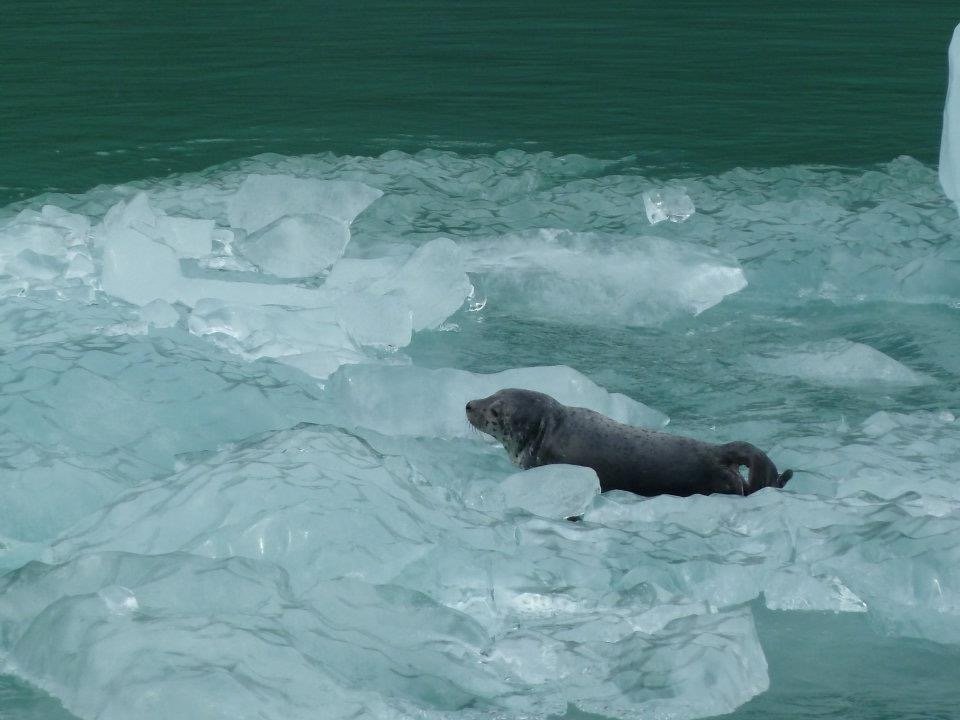
The memories with my then-8-year-old daughter of kayaking among towering glaciers, hearing the ice crack and pop as it shifted and calved, are the kind that stay with you forever. Drifting quietly past icebergs while seals rested on them — including a baby seal nestled into the ice — was both beautiful and haunting in its stillness.
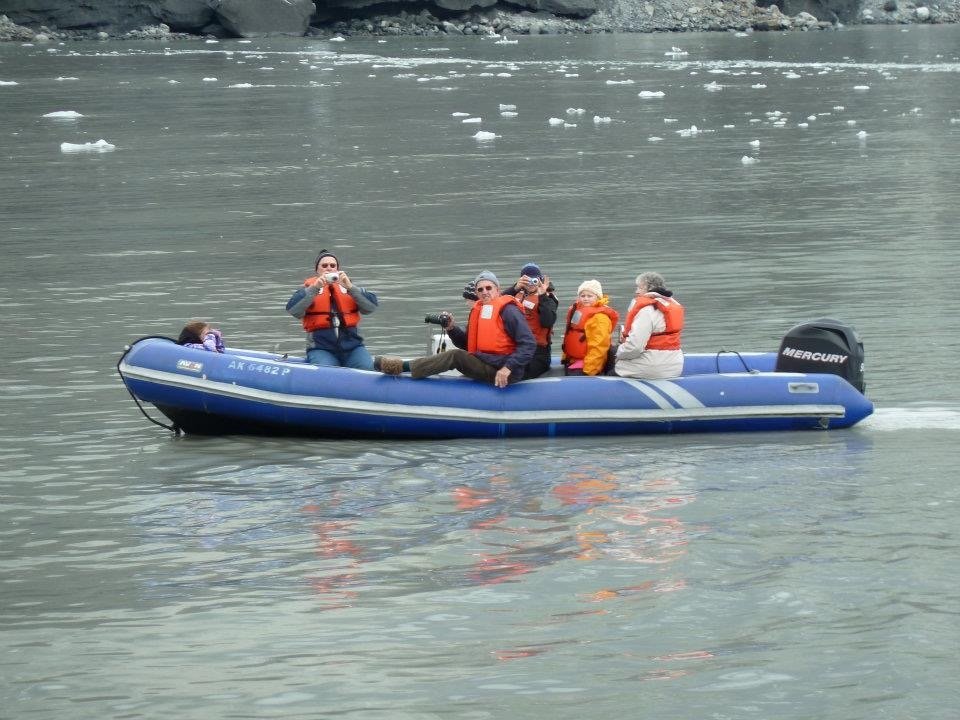
We spent days exploring by kayak and shore excursion, weaving through remote coves and untouched shorelines, often feeling like we were the only people in the world. On zodiac boats, we followed and at times found ourselves surrounded by whales, close enough to feel completely immersed in their world without disturbing it.
One moment that still stands out was kayaking with another guest and realising we had drifted far too close to a grazing bear on the shoreline — a reminder of just how wild and immediate the environment really is.
These are not just travel experiences; they are deeply vivid, shared moments that become lifelong memories — especially when seen through the eyes of a child experiencing that scale of wilderness for the first time.
Pricing for expedition cruising in Alaska can vary significantly depending on the time of year you choose to travel, as well as the size and style of vessel.
Generally, smaller expedition ships tend to sit at a higher price point per night, but they also offer a more immersive experience, fewer guests onboard, and access to remote areas that larger ships simply cannot reach. Larger vessels may offer more traditional cruise amenities, but they don’t provide the same level of intimacy with the environment.
There are now several excellent expedition cruise operators exploring Alaska’s waters, each offering slightly different itineraries, ship styles, and inclusions. Because availability, routing, and pricing can change from season to season, it’s always a good idea to check in for the most up-to-date options before planning your trip.
If you’re considering Alaska expedition cruising, it’s worth comparing not just price, but also guest numbers, itinerary flexibility, and access to protected wilderness areas — as these factors make a big difference to the overall experience.


Average Weather & Temperatures (April – October)
April:
3°C to 9°C — common snow still present; rainfall approx. 40–50mm.
May:
2°C to 14°C — conditions begin to warm as snow melts; rainfall around 50–60mm.
June:
7°C to 18°C — mild conditions; rainfall averaging 50–70mm.
July:
12°C to 20°C — warmest period; coastal rainfall around 70–90mm.
August:
11°C to 18°C — slightly cooler but wetter; rainfall increases to 80–100mm.
September:
4°C to 13°C — temperatures begin to drop; rainfall increases to 80–120mm.
October:
-1°C to 7°C — colder conditions return; rainfall around 60–90mm.
Witnessing calving glaciers thunder like cannon fire, with shards of diamond-blue icebergs drifting across tranquil waters, is one of those rare experiences that stays etched in your memory. The scale and sound of it is almost impossible to describe until you’ve felt it in person.
Moments like humpback whales breaching spectacularly in the distance, Sea otter floating effortlessly on their backs, and Brown bear roaming the stark coastal shorelines all come together into something deeply unforgettable.
These are the kinds of encounters that don’t just fill a travel itinerary — they become shared memories that last a lifetime, especially when experienced with family. For you and your daughter, they’ve clearly become those rare travel moments that are never forgotten.